
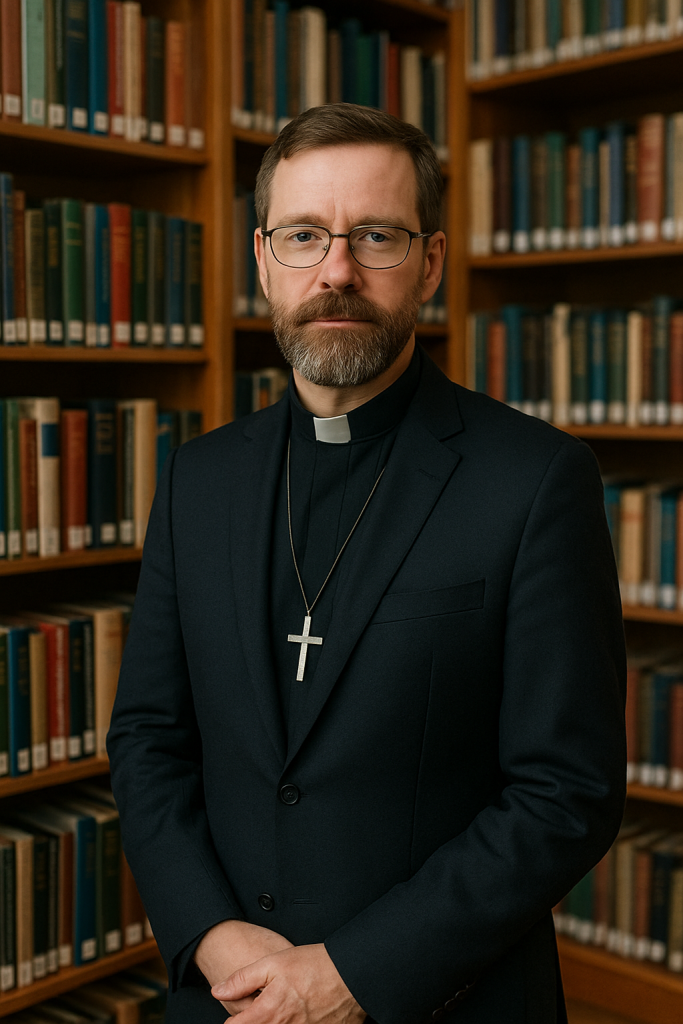
Pr. Prof. Dr. Andrei MARIN
Professor of Theology & Religious Studies. PhD in Systematic Theology
Pr. Prof. Dr. Andrei Marin
Professor of Theology & Religious Studies. PhD in Systematic Theology
“Faith and reason are not in conflict—they complete one another. I teach theology as both a spiritual journey and an intellectual pursuit.”
About Me
I am a university professor, theologian, and researcher with over 18 years of experience in higher education and pastoral ministry. My academic and spiritual vocation centers on helping students understand theology as a living dialogue between faith, history, and the modern world.
Currently serving as Professor of Theology and Religious Studies at the University of Vienna, I lecture on systematic theology, Christian ethics, and interreligious dialogue. My work bridges traditional theological concepts with contemporary issues—technology, social justice, and moral philosophy.
I believe theology must be lived, not merely studied. My teaching combines rigorous academic inquiry with a deep respect for the spiritual experience, encouraging students to think critically while remaining rooted in faith.
Academic Credentials
PhD in Systematic Theology
Dissertation: “Divine Presence in the Modern World: A Theological Reinterpretation of Incarnation and Revelation”
Master of Theology (M.Th.)
(2006) Graduated with Distinction
Bachelor of Arts in Theology and Philosophy
(2004)
Professional Certifications
Certificate in Biblical Greek and Hebrew Studies (2012)
Advanced Certificate in Pastoral Counseling –(2016)
Certificate in Interfaith Dialogue and Mediation (2020)
Professional Experience
Professor of Theology and Religious Studies
| 2016 – Present
- Lecturing in Systematic Theology, Christian Anthropology, and Ethics
- Supervising 10+ PhD and master’s theses annually
- Leading the research group “Theology and the Human Condition in the 21st Century”
- Published multiple works on faith, moral responsibility, and spirituality
- Developed online theology courses reaching 1,500+ international students
Associate Professor of Dogmatic Theology
| 2009 – 2016
- Designed undergraduate and graduate curricula in theology and philosophy of religion
- Coordinated the Erasmus+ academic exchange program for theology students
- Organized interfaith conferences and symposia
- Mentored young theologians entering ministry and academia
Lecturer & Research Fellow
| 2004 – 2009
- Conducted research on patristic theology and Christian anthropology
- Delivered courses in Early Christian Doctrine and Comparative Religion
- Participated in international theological colloquia and published peer-reviewed papers
Publications & Speaking
Conference Presentations:
- “Reclaiming Sacred Language in a Secular Age” – International Theology Congress, Rome (2024)
- “The Ethics of Artificial Intelligence in Christian Thought” – Faith & Technology Symposium, Zurich (2023)
- “The Church in Dialogue with Modern Philosophy” – European Theological Forum, Brussels (2022)
Academic Journals:
- 40+ peer-reviewed articles in Theological Studies, Journal of Christian Ethics, and Modern Theology Review
Teaching Experience
University Teaching (Undergraduate & Graduate):
- Systematic Theology
- Christian Ethics and Moral Theology
- Biblical Hermeneutics
- Patristics and Historical Theology
- Theology of Culture and Modernity
Seminary Instruction & Mentorship:
- Trained over 300 seminarians and theology students for ministry
- Integrated psychological and cultural perspectives into pastoral education
- Emphasized personal formation, dialogue, and service-oriented theology
Public Lectures & Community Engagement:
- Frequent speaker in academic and ecclesiastical events across Europe
- Organized community seminars on “Faith in Times of Crisis” and “The Role of the Church in Modern Society”
What I Teach
1. Systematic Theology (Intermediate to Advanced)
- The nature and attributes of God
- Trinitarian theology
- Incarnation and redemption
- Ecclesiology and eschatology
2. Christian Ethics & Moral Theology (All Levels)
- Human dignity and moral responsibility
- Bioethics, social ethics, and ecological theology
- Theological approaches to justice and compassion
3. Biblical Theology & Hermeneutics (Intermediate)
- Scriptural exegesis and historical-critical method
- The unity of the Old and New Testament revelation
- Modern interpretations of biblical truth
4. Interreligious Dialogue & Comparative Theology (Advanced)
- Christianity and Islam: theological convergences and contrasts
- Eastern and Western Christian thought
- Faith, pluralism, and global ethics
5. Faith and Reason: Philosophy of Religion (All Levels)
- The relationship between theology and science
- Rationality, belief, and revelation
- Modern philosophical challenges to religious faith
Teaching Philosophy & Methodology
My Approach:
Theology must speak to both the heart and the mind. I emphasize critical thinking, spiritual reflection, and academic precision within a context of faith.
Teaching Framework:
- Contextual Introduction → Theological Analysis → Scriptural Reflection → Discussion → Application to Life & Ministry
Core Values in My Teaching:
- Dialogue: Theology grows in encounter with others
- Faith & Reason: Integration of intellect and spirituality
- Relevance: Connecting theology to today’s moral, cultural, and social challenges
- Formation: Nurturing both academic understanding and personal vocation
Student Testimonials
Testimonial 1:
“Professor Marin’s classes completely changed the way I think about theology. His lectures are deeply spiritual yet intellectually rigorous. I learned how to connect faith with contemporary issues.”
— Elena T., Master’s Student in Theology, Vienna
Testimonial 2:
“Dr. Marin helped me rediscover the joy of theological study. He encourages open dialogue and thoughtful reflection. His mentorship guided my entire doctoral journey.”
— Fr. Luca M., PhD Candidate, Bucharest
Testimonial 3:
“His teaching is both profound and practical. Each class feels like a conversation between faith and the modern world.”
— Daniel P., Parish Priest, Cluj
Rates & Scheduling
Private Theological Mentorship & Tutoring
- Individual Sessions: (€48/hour)
- 10-Session Package: (10% off)
- 20-Session Package: (18% off)
Group Seminars (2–5 participants):
Availability:
- Weekday evenings: 17:00 – 21:00 CET
- Saturdays: 09:00 – 14:00 CET
- Sundays: by appointment
Booking Process:
- Send an email outlining your study interests or spiritual goals
- Schedule a free 20-minute introductory consultation
- Customized study plan provided after first session
Cancellation Policy:
- 24h notice: no charge
- <24h: 50% fee
- No-show: full fee
Languages
Romanian – Native
English – Fluent (C2 level)
French – Intermediate (B1 level)
Greek – Reading proficiency (Biblical)
Professional Memberships
- European Academy of Religion – Member since 2014
- Society for the Study of Theology (UK) – Senior Member since 2017
- International Orthodox Theological Association – Member
Contact & Connect
Email: Pr.Prof.Dr.Andrei.Marin@tychy-university.edu.pl
LinkedIn: linkedin.com/in/
Schedule Consultation: calendly.com/
Additional Information
Work Environment: Dedicated home office for online theological mentoring; quiet environment, professional audio-video equipment, library with 4,000+ volumes.
Student Requirements: Open mind, respect for diverse perspectives, and willingness to engage deeply with theological texts.
Preferred Student Profile: Undergraduate or graduate students, clergy, or laypersons seeking a deeper understanding of theology and Christian philosophy.
Current Projects: Research on “Theology and Artificial Intelligence: The Human Person in a Digital Age” and co-editing an international volume on “Faith in Post-Secular Europe.”
Professor Marin’s focus on nurturing both academic understanding and personal vocation resonates well with me. The importance placed on personal formation alongside intellectual growth could lead to more well-rounded theologians who are equipped to face modern challenges in ministry.
‘Integrated psychological and cultural perspectives into pastoral education’ shows depth in Professor Marin’s approach to teaching theology. This may be beneficial for preparing future leaders who can address not just spiritual needs but also psychological ones within their congregations.
‘Theology must be lived’ is a profound statement that captures the essence of religious study. I think it could inspire students to take their theological education beyond the classroom and apply it practically in their lives, thus enriching their spiritual journeys.
The blending of traditional theological concepts with modern challenges, such as technology and social justice, is noteworthy. It raises important questions about how faith can adapt to contemporary moral dilemmas. I am curious about the specific methods he uses to facilitate this integration in his teaching.
‘Faith in Times of Crisis’ seems like an incredibly relevant seminar topic given current global issues. I believe discussions like these can provide valuable insights into how communities can support one another through challenging times while remaining rooted in their beliefs.
‘The Ethics of Artificial Intelligence in Christian Thought’ presents an essential intersection of faith and technology that needs addressing today. I’m eager to learn how theological perspectives can inform ethical considerations surrounding AI development and implementation.
The approach of integrating faith with contemporary issues is quite fascinating. It is refreshing to see a theologian who values both intellectual rigor and spiritual reflection. Professor Marin’s emphasis on dialogue and the relevance of theology in today’s world could encourage more students to engage deeply with these subjects.
I appreciate how Professor Marin articulates the relationship between faith and reason. It is essential for theology to not only be a scholarly pursuit but also a spiritual journey. This perspective might help bridge gaps between different belief systems, especially in our increasingly pluralistic society.
‘Reclaiming Sacred Language in a Secular Age’ sounds like an intriguing conference topic. I wonder how Professor Marin will approach this challenge and what solutions he might propose for re-establishing sacredness in our increasingly secularized society.